A–B: Core Terms
Adhesive
A substance used to bond the screen frame to the door frame. In magnetic screen doors, adhesive strips replace screws and nails. Also called: mounting adhesive, magic sticker, VHB adhesive.
Adhesive Strip
Pre-cut strips of adhesive material applied to the door frame. The screen frame presses against these strips to bond temporarily (but securely) to the surface. Also called: adhesive tape, mounting strip.
Airflow
The movement of air through the mesh when the magnetic screen door is in place. Mesh with higher openness (more open weave) allows more airflow. Measured as a percentage of open space in the mesh.
Aluminum Frame
The structural frame that holds the mesh in place. Made from aluminum (not plastic) for durability. Often PVC-coated for weather resistance. Also called: screen frame, door frame.
Aperture
The open space between mesh threads. A larger aperture allows more airflow and visibility but may let in smaller insects. Also called: mesh opening, open area.
Arched Door
A door with a curved top. Requires custom-shaped magnetic screen door (not standard rectangular). Arched doors cannot use standard screen sizes.
C: Closure and Configuration
Center Seam
The vertical line where the two halves of a magnetic screen door meet. Contains the magnetic closure strips that hold the door sealed. Also called: magnetic closure line, meeting point.
Configurator / Online Screen Door Configurator
An online tool that allows buyers to enter their measurements, choose options (mesh type, frame color), preview the result, and get a quote. The defining feature of custom magnetic screen door companies. Also called: design tool, custom builder.
Custom Screen Door by Dimensions
A magnetic screen door made to the buyer's exact measurements—not a standard approximation. The core offering of companies like ZOORSCREEN. Also called: made-to-measure screen, bespoke screen.
Cut-to-Size
Screens that are manufactured to specific measurements provided by the buyer, rather than selected from a range of standard sizes.
D–E: Door Types and Materials
Depth / Frame Depth
The thickness of the door frame, measured from the front face to the back face. Important for adhesive mounting—the adhesive needs adequate surface area to bond properly. Also called: door thickness, frame thickness.
Double Door
A door entry with two panels that meet in the center. Requires two magnetic screen panels or one wide panel configured for double-door use. Also called: French door, paired door.
Heavy Duty Fiberglass Mesh
A high-quality mesh material made from fiberglass fibers. 3–significantly stronger than standard fiberglass. Resistant to stretching, tearing, and UV damage. Preferred for high-traffic applications and pet households. Also called: fiberglass mesh, PET mesh, pet screen.
Entry Door
The primary exterior door of a home, typically the front door. Usually a single door (not double). Also called: front door, main entry.
Exterior Door
Any door that leads to the outside of the home. Includes front doors, back doors, patio doors, and garage doors.
F: Fit and Frame Terms
Fiberglass Mesh
Standard screen mesh material made from woven glass fibers coated with PVC. Affordable and good visibility, but less durable than fiberglass. Standard fiberglass sags in larger sizes. Also called: fiberglass screen, glass fiber mesh.
Fit / Precise Fit
How well the magnetic screen door matches the door frame dimensions. Precise fit means no gaps, no sag, and proper magnetic closure alignment. The primary benefit of custom sizing over standard sizes.
Frame Color
The color of the aluminum frame holding the mesh. Options typically include white, black, bronze, and sometimes custom colors. Also called: finish, frame finish.
French Door
A double door with glass panels extending most of the door's height. Creates an architectural feature while allowing light. Requires magnetic screen solutions for French doors specifically.
Full-Perimeter Seal
A screen that seals on all four sides (top, bottom, left, right), not just at the center. Achieved through adhesive mounting around the entire frame. Creates a bug-tight seal.
G–H: Mesh and Hardware
Gap
A space between the screen edge and the door frame. Gaps allow bugs to enter. A precise fit eliminates gaps. Also called: clearance gap, perimeter gap.
Gauss
A unit measuring magnetic field strength. Higher Gauss = stronger magnetic pull. Quality magnetic screen doors specify Gauss ratings for their magnetic closures.
Hands-Free Operation / Hands-Free Mesh Screen
A defining feature of magnetic screen doors. The screen opens when pushed through and closes automatically via magnetic pull. Requires no latches, handles, or manual operation. Also called: self-closing, automatic closure.
Heavy Duty Fiberglass Mesh
An upgraded version of standard fiberglass mesh with better durability and dimensional stability. Better than standard fiberglass but not as strong as heavy duty fiberglass. Also called: reinforced fiberglass, heavy fiberglass.
Hook and Loop
A fastening system sometimes used in screen doors. The screen edges attach to hook-and-loop strips rather than magnets. Less common than magnetic closures. Also called: Velcro (brand name).
I–M: Installation and Industry Terms
Indoor-Outdoor Flow
The seamless transition between interior and exterior spaces. Magnetic screen doors enhance indoor-outdoor flow by allowing open doors without bug intrusion. A selling point in real estate.
Installation
The process of mounting a magnetic screen door to a door frame. For adhesive systems, typically takes 10–15 minutes with no tools required. Also called: mounting, setup.
Instant Quote
A real-time price estimate provided by an online configurator based on the buyer's entered measurements and selected options. A feature of modern custom screen door companies.
Magic Sticker / Magic Sticker Adhesive
A brand name for the adhesive mounting system used in ZOORSCREEN magnetic screen doors. A proprietary adhesive technology that bonds firmly but removes cleanly. Also called: adhesive mounting system, peel-and-stick adhesive.
Magnetic Pull Force
The strength with which the magnetic closure holds the two screen halves together. Measured in Gauss or ounce-pull. Wind-resistant magnetic closures have higher pull force.
Magnetic Screen Door
A screen door held closed by magnets rather than springs, latches, or other hardware. The defining feature is the magnetic center seam that opens when pushed through and closes automatically. Also called: magnetic screen, magnetic fly screen.
Mesh / Mesh Screen
The woven material that covers the door opening. Lets air in while keeping insects out. Made from fiberglass or fiberglass. Also called: screen material, screening, mesh material.
Mesh Count / Weave Density
The number of openings per linear inch in the mesh. Common counts are 18×16 (18 openings horizontally, 16 vertically). Higher counts = finer mesh = fewer insects but less airflow. Also called: thread count, mesh size.
Mounting Surface
The door frame surface to which the adhesive is applied. Must be clean, dry, and free of grease for proper adhesion.
N–R: Specialty Terms
No-Drill Screen Door
A magnetic screen door that requires no drilling for installation. Uses adhesive mounting instead. Essential for renters who cannot modify their door frames. Also called: renters screen, adhesive-mount screen.
Open Area / Openness
The percentage of the mesh surface that is open space. Higher open area = more airflow and visibility. Lower open area = better insect protection. Trade-off between ventilation and screening.
Outdoor Living Space
Porches, decks, patios, and other exterior spaces used for relaxing and entertaining. Magnetic screen doors enhance outdoor living spaces by allowing open doors without bug problems.
Pay-by-Area Pricing
A pricing model where buyers pay based on the actual square footage of their screen, not fixed size tiers. Custom sizing enables fair pricing. Also called: per-square-foot pricing, area-based pricing.
Pet Friendly Screen Door / Pet Screen Door
A magnetic screen door configured for homes with pets. Uses heavy duty fiberglass mesh for claw resistance. Often includes reinforced bottom panels and stronger magnetic closures. Also called: pet-proof screen, dog screen door.
PVC Coating
A polyvinyl chloride coating applied to mesh and frame materials for weather resistance, UV protection, and durability. Standard on quality magnetic screen doors.
Reinforced Frame / Frame Reinforcement
Additional structural support in the screen frame, typically aluminum or steel rods, that prevents warping and maintains shape. Essential for large-format magnetic screen doors.
Retractable Screen Door
A screen that rolls up into a housing cassette when not in use. Operates via a spring mechanism. More complex and expensive than magnetic screen doors. Less DIY-friendly.
ROI (Return on Investment)
The financial return from a purchase relative to its cost. Magnetic screen doors offer high ROI through energy savings, extended product lifespan, and home value enhancement.
S: Sealing and Sizing Terms
Sag / Sagging
When the mesh or screen bows downward, typically in the center, due to insufficient tension, oversized dimensions, or material stretch. A sign of poor fit or low-quality materials. Also called: droop, screen sag.
Seamless Seal
A screen-to-frame seal with no gaps or openings. Achieved through precise custom fit and full-perimeter adhesive mounting. Prevents any bug entry points.
Sliding Glass Door
A door with large glass panels that slide horizontally along a track. Requires sliding glass door magnetic mesh configured for slider installation. Also called: slider, patio door.
Sliding Glass Door Magnetic Mesh
A magnetic screen configured specifically for sliding glass doors. Must not interfere with the sliding mechanism. Also called: slider screen.
Spline
A flexible strip, typically rubber or vinyl, that holds mesh material in the frame channel. Used in some screen door constructions. Also called: screen spline, rubber spline.
Standard Size / Standard Sizing
Pre-manufactured sizes that aren't customized to the buyer's door. Standard sizes force buyers to accept gaps and poor fit. The alternative to custom sizing.
Surface Prep
The preparation of the door frame surface before adhesive application. Typically involves cleaning with rubbing alcohol to remove grease, dust, and debris. Critical for proper adhesion.
T–Z: Technical and Closing Terms
Temperature Range / Operating Temperature
The temperature range within which the adhesive and magnetic closure perform properly. Quality adhesives work from 0°F to 150°F (-18°C to 65°C). Also called: temp range, working temperature.
Tension
The tautness of the mesh across the frame. Proper tension prevents sag while allowing the mesh to lie flat. Achieved during installation and maintained over time.
Tiered Pricing
A pricing model where screens are sold in fixed price tiers based on broad size ranges (small/medium/large). Forces buyers to pay for more material than they need. The alternative to pay-by-area pricing.
UV Resistance / UV Stabilized
The ability of mesh material to resist degradation from ultraviolet (sun) light. UV-stabilized mesh lasts longer in sun-exposed installations. Standard on quality meshes.
Visibility
How clearly you can see through the mesh. Measured subjectively and through light transmission percentages. Fiberglass mesh typically offers better visibility than fiberglass.
VHB Adhesive (Very High Bond)
A type of acrylic foam adhesive known for strong bonding. 3M VHB is the industry standard for quality adhesive mounting. Also called: VHB tape, foam adhesive.
Wind-Resistant Magnetic Closure
A magnetic closure designed to maintain a seal in windy conditions. Features stronger magnets, wider strips, and reinforced construction. Essential for exterior doors and exposed locations.
Wind Load
The force exerted by wind on a screen door. Wind load increases with screen size and wind speed. Wind-resistant magnetic closures are rated for specific wind load capacities.
Weave / Weave Pattern
The pattern in which mesh threads are interlaced. Plain weave is standard. Dutch weave and other patterns offer different characteristics. Also called: mesh pattern, weave style.
Width
The horizontal measurement of the door frame. Measured in three places (top, middle, bottom) with the smallest measurement used for custom sizing. Also called: frame width.
Z-Vent
A small vent sometimes installed in magnetic screen doors to allow minimal airflow while maintaining screening. Not common in magnetic screen doors.
Quick Reference: Common Configurations
For First-Time Buyers
→ Custom screen door by dimensions + heavy duty fiberglass mesh + wind-resistant magnetic closure + magic sticker adhesive
For Renters
→ Custom sizing + no-drill installation + minimal frame color options
For Pet Owners
→ Durable fiberglass mesh + pet friendly screen door + reinforced adhesive + solid bottom panel option
For French Doors
→ Dual single-panel screens OR single double-wide screen + center gap measurement
For Large Openings
→ Reinforced frame + heavy duty fiberglass mesh + multiple magnetic closure zones + extra adhesive
Knowledge is power. Now that you understand the terminology, visit zoorscreen.com to use the online screen door configurator and order your custom magnetic screen door with confidence.
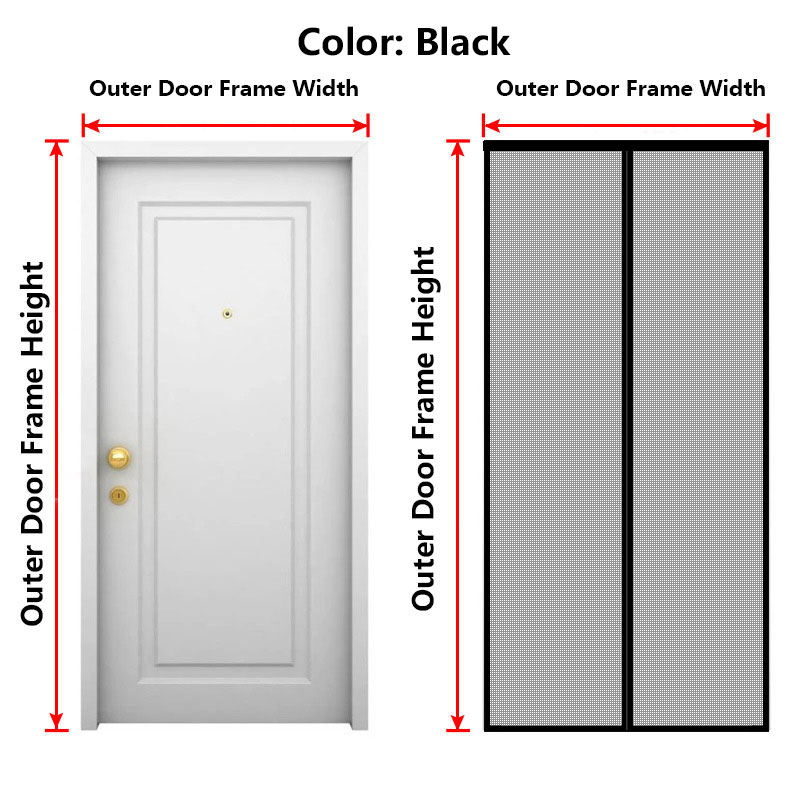 Measuring & Installation
 Measuring & Installation